
When a medical emergency requires 911
Anyone experiencing a medical emergency needs emergency services right away. Call 911 immediately for urgent symptoms, sudden changes in condition or any situation requiring emergency response. Juniper provides non-emergency medical transportation only and offers no medical care in the vehicle.
Do not use an online or phone scheduling request for urgent health needs. The request form is not monitored for emergencies, and schedulers operate Monday to Friday from 6:00 AM to 6:00 PM and Saturday from 7:00 AM to 3:00 PM, closed Sunday.
What non-emergency transport provides
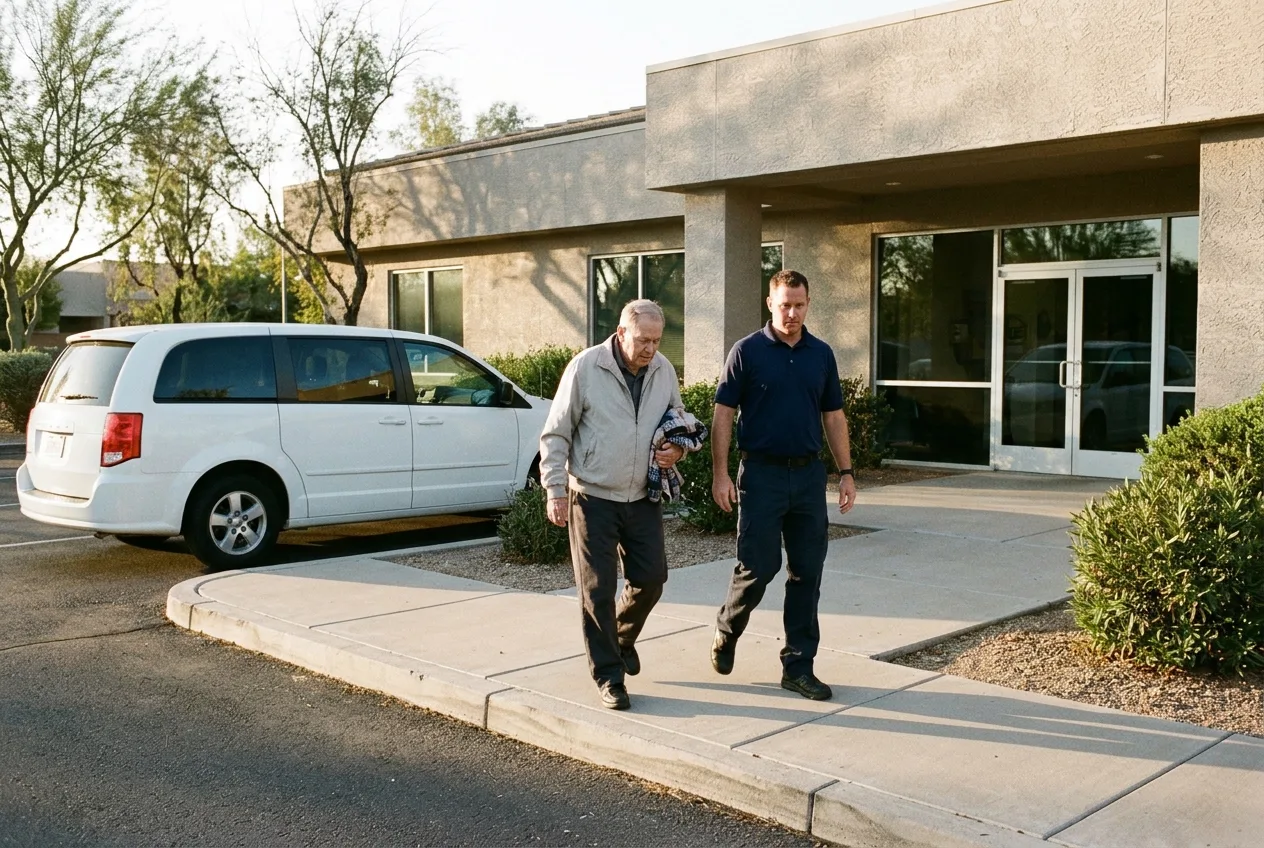
Non-emergency medical transportation serves planned or routine trips for passengers who are medically stable and do not need care or monitoring in transit. Common rides go to doctor and specialist visits, dialysis, chemotherapy and radiation, rehabilitation and therapy, outpatient procedures, imaging and testing or dental appointments.
Juniper also handles hospital discharge rides from a facility to home or another facility, senior rides and long-distance trips with 72 hours’ notice. Drivers hold CPR and first aid training alongside passenger assistance and defensive driving, without acting as a clinical crew.
Monitoring, oxygen and stretcher limits
Passengers who need medical monitoring, oxygen management or medical care while traveling must use an ambulance rather than non-emergency stretcher transport. Stretcher vans carry passengers who must stay lying down and need no medical monitoring, staffed by a two-person crew with a locked stretcher mount.
A passenger who manages their own portable oxygen may bring it along when secured in the vehicle. Juniper can also supply a transport wheelchair for the ride if requested at booking, and bariatric stretcher rides up to 700 lb can be reviewed.
Timing and booking differences
Non-emergency medical rides are scheduled in advance rather than dispatched for immediate emergencies. Juniper asks for at least 48 hours’ notice for standard rides and 72 hours’ notice for stretcher or long-distance trips, with same-day requests handled by phone only subject to availability.
After reviewing availability, price and payment or authorization with a scheduler, confirmed rides receive a 30-minute pickup window. A scheduler or driver calls if pickup will be more than 15 minutes outside that window, and sending a request never confirms a ride.
Everyday examples for families and staff
A family caregiver arranging a routine oncology visit or an older adult heading to a dental checkup typically looks at non-emergency medical transport. Hospital discharge planners and skilled-nursing staff also use it when a stable patient is moving home or to another facility without en route clinical care.
By contrast, a patient whose condition is unstable or who requires active monitoring or oxygen management during transit needs an ambulance. Checking those needs early helps match the trip to the right service.
For a medical emergency, call 911 immediately rather than submitting a ride request. For planned, non-emergency rides in the Las Vegas valley, call (702) 000-0000 or send a request to review availability with a scheduler.